Articles
-
Bringing FIRST to life
Share Bringing FIRST to life on Facebook Share Bringing FIRST to life on X (formerly Twitter) Share Bringing FIRST to life on Linkedin Email Bringing FIRST to life link
We'd like to share an anonymised example that demonstrates how GIRFE principles can translate into practical action.
Mr A was a 52-year-old man who had recently been released from prison. Shortly after his release, he received a diagnosis of terminal cancer and had started palliative chemotherapy. He was experiencing significant pain, had no settled accommodation, very limited income and was living in a shed behind a friend's property. The accommodation consisted of little more than a bed and a kettle. A district nurse on first visit to the property became concerned about both his health and living circumstances and madeContinue reading
We'd like to share an anonymised example that demonstrates how GIRFE principles can translate into practical action.
Mr A was a 52-year-old man who had recently been released from prison. Shortly after his release, he received a diagnosis of terminal cancer and had started palliative chemotherapy. He was experiencing significant pain, had no settled accommodation, very limited income and was living in a shed behind a friend's property. The accommodation consisted of little more than a bed and a kettle. A district nurse on first visit to the property became concerned about both his health and living circumstances and made contact through FIRST.
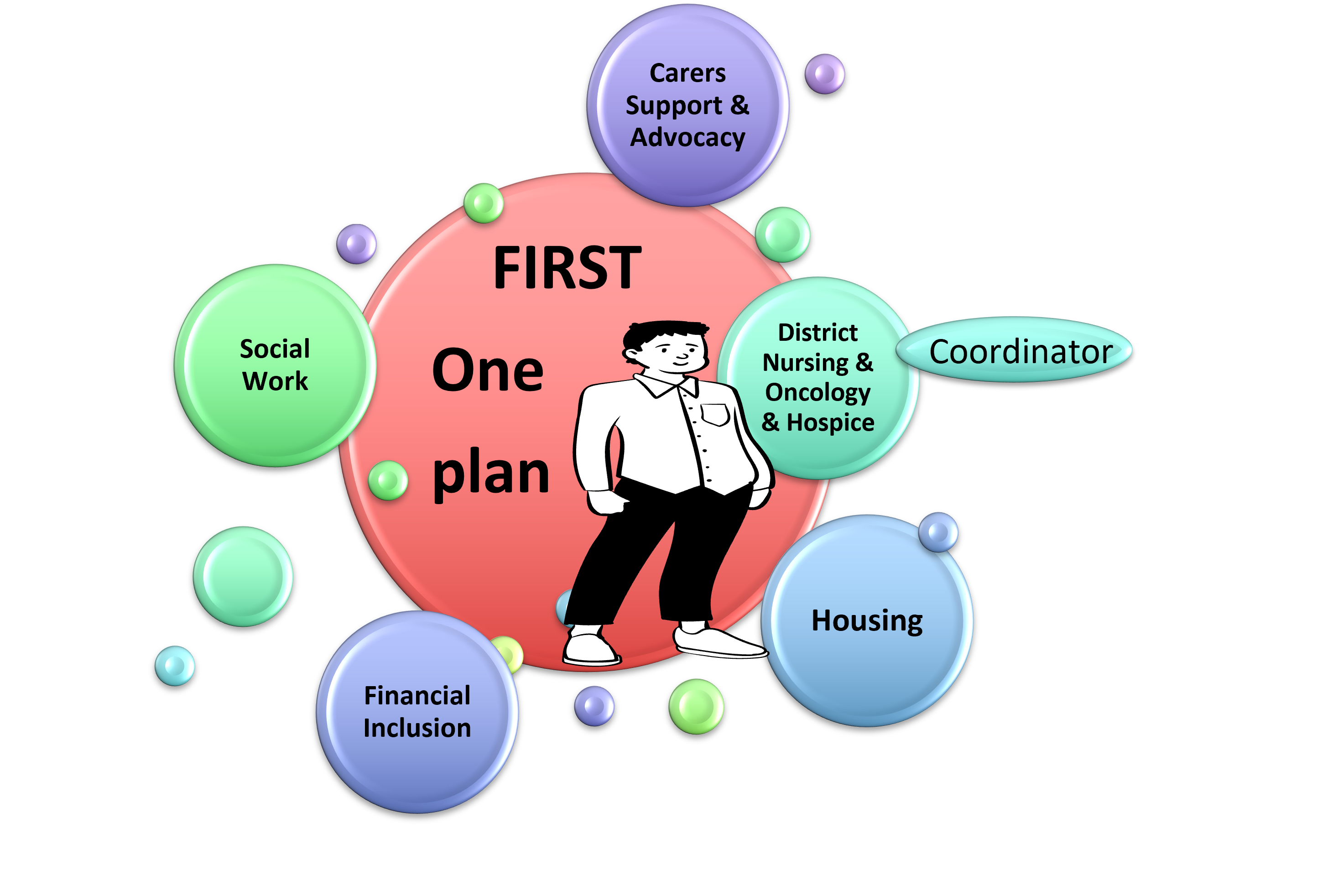
If we think about this situation through a traditional service lens, there were multiple issues:
- housing
- health
- financial
- social work
- carer support
- potential advocacy
What struck us was that none of those individual descriptions really reflected what mattered to the person.
When the nurse spoke with Mr A, his priorities were actually very clear. He wasn't asking for lots of services. He told us: "I want to be pain free and stay independent for as long as possible". That statement became the focus for our planning.
Rather than starting with organisational responsibilities, FIRST enabled us to start with the person, their wishes and their outcomes. The referral immediately highlighted complexity, vulnerability and the need for coordinated working across multiple agencies.
Importantly, we were able to bring those perspectives together early rather than waiting for separate assessments and referrals to occur at different times. For us, this case illustrates something important about GIRFE:
- people rarely present with needs that fit neatly within a single professional boundary
- their circumstances, strengths, aspirations and challenges are interconnected
- what they need from us is not multiple separate responses, but one coordinated response built around what matters most to them
How FIRST enabled a coordinated response
Once the referral came into FIRST, the focus became bringing together the right people to understand the whole situation and agree a coordinated response. The district nurse's concerns extended well beyond health needs. There were significant housing issues, financial concerns, social isolation, uncertainty about future care arrangements and increasing pressure on the friend who was providing support.
Because these issues were discussed through FIRST, we were able to consider them together rather than separately. An urgent joint assessment was arranged involving social work and district nursing. Through the discussion, it became clear that several services had an important contribution to make:
- housing colleagues began working to identify more suitable accommodation options
- financial Inclusion services were engaged to maximise income and ensure Mr A was receiving all benefits and entitlements available to him
- advocacy support was offered so that he could participate fully in discussions and decisions about his future
- support was arranged for the friend who had effectively become an unpaid carer, helping to reduce the risk of carer breakdown
- district nursing and specialist palliative care services continued to support symptom management, pain control and treatment planning
Most importantly, these interventions were not planned in isolation. Everyone understood:
- what mattered to Mr A
- what role they were playing
- what outcomes we were collectively trying to achieve
- how their contribution linked to the wider plan
This is where FIRST adds most value. No individual service needed to solve every problem. Instead, services worked together to create a coordinated response built around the person's priorities.
The conversation was not: Which service owns this case?
The conversation became: What needs to happen for this person to remain pain free, maintain independence and live with dignity for as long as possible?
That shared understanding allowed support to be mobilised quickly and appropriately.
For us, this is a practical example of GIRFE in action. It demonstrates how integrated working can move beyond coordination between organisations and become coordination around a person's life, circumstances and goals
The outcomes for Mr A
When we first became involved after a referral from Mr A’s friend, Mr A was living in highly unsuitable accommodation, experiencing significant pain, facing financial hardship and trying to cope with a new terminal diagnosis. His friend was providing support but had little formal assistance themselves.
Following the coordinated actions agreed through FIRST the very next day, important changes began to happen:
- accommodation issues were addressed and temporary housing arrangements were offered though not initially accepted due to distance from his friend. Currently longer-term solutions are being explored
- Financial Inclusion colleagues worked with Mr A to maximise his income and access available benefits, reducing some of the financial pressures he was experiencing
- health colleagues coordinated his pain management and palliative care support, helping ensure his treatment and symptom management reflected his wishes and priorities
- advocacy support helped him remain involved in decisions about his care and future planning
- the friend who was supporting him was recognised as an unpaid carer and offered appropriate support, helping sustain that important relationship
What is important is that these outcomes did not happen because one service took ownership of everything. They happened because services worked together around a shared understanding of what mattered most to the person. For Mr A, success wasn't measured by how many services became involved. Success was measured by whether he could:
- remain as independent as possible
- have better control of his pain and symptoms
- maintain dignity and choice and stay connected to the people important to him
- he could feel supported rather than overwhelmed by services
This is where GIRFE and FIRST come together. The focus moves away from organisational activity and towards personal outcomes.
The outcome was not simply a series of referrals. The outcome was one coordinated plan built around the person's wishes, strengths and circumstances. Even when we wondered how a community electric bed and commode would fit in a shed.
For us, this case demonstrates what can happen when organisations see the whole person rather than just the part of the situation that falls within their own service boundaries. And it reinforces one of our most important learning points – people rarely need a single service solution; they need a coordinated response built around the life they are trying to live.
-
East Ayrshire support sequence
Share East Ayrshire support sequence on Facebook Share East Ayrshire support sequence on X (formerly Twitter) Share East Ayrshire support sequence on Linkedin Email East Ayrshire support sequence linkThe support sequence is a strengths-based framework that guides the conversation about what matters to a person and how best to support them.
It helps practitioners take a structured, consistent approach starting with the individual’s own strengths and assets, before exploring support from family, community, technology, and wider services. This ensures that support is built on the persons strengths and priorities, promotes independence, and that formal or funded support is only considered where required.
This tool may be updated in the future, please refer back to this page for the most up-to-date copy.
The support sequence is a strengths-based framework that guides the conversation about what matters to a person and how best to support them.
It helps practitioners take a structured, consistent approach starting with the individual’s own strengths and assets, before exploring support from family, community, technology, and wider services. This ensures that support is built on the persons strengths and priorities, promotes independence, and that formal or funded support is only considered where required.
This tool may be updated in the future, please refer back to this page for the most up-to-date copy.
-
GIRFE toolkit
Share GIRFE toolkit on Facebook Share GIRFE toolkit on X (formerly Twitter) Share GIRFE toolkit on Linkedin Email GIRFE toolkit link
GIRFE has been co-designed by the Scottish Government, Health and Social Care Partnerships, and the people of Scotland. This has included the co-design of a national toolkit, focused on developing a ‘Team around the Person’, which can help support the move towards a person-centred approach to care and support in Scotland.

The Team around the Person Toolkit features principles, tools, guidance, and case studies to support health and social care practitioners, as well as wider support services, to embed the GIRFE approach. The aim is to improve and enhance how people can access and receive care, and provide streamlined supportContinue reading
GIRFE has been co-designed by the Scottish Government, Health and Social Care Partnerships, and the people of Scotland. This has included the co-design of a national toolkit, focused on developing a ‘Team around the Person’, which can help support the move towards a person-centred approach to care and support in Scotland.

The Team around the Person Toolkit features principles, tools, guidance, and case studies to support health and social care practitioners, as well as wider support services, to embed the GIRFE approach. The aim is to improve and enhance how people can access and receive care, and provide streamlined support tailored to their needs.
-
Team meeting – MDT working agenda item
Share Team meeting – MDT working agenda item on Facebook Share Team meeting – MDT working agenda item on X (formerly Twitter) Share Team meeting – MDT working agenda item on Linkedin Email Team meeting – MDT working agenda item link

MDT working should be a standard agenda item on all team meeting agendas across the health and social care partnership.
This resource has been produced to support reflection and learning on MDT working within a team meeting setting.

MDT working should be a standard agenda item on all team meeting agendas across the health and social care partnership.
This resource has been produced to support reflection and learning on MDT working within a team meeting setting.
-
Advancing MDT working – team discussion resource
Share Advancing MDT working – team discussion resource on Facebook Share Advancing MDT working – team discussion resource on X (formerly Twitter) Share Advancing MDT working – team discussion resource on Linkedin Email Advancing MDT working – team discussion resource link

The self-facilitated resource has been developed to support teams with the implementation of the Getting it Right for Everyone (GIRFE) approach by:
- further advancing person-centred MDT working
- exploring current MDT Working practices in your locality
- considering future aspirations
- identifying next steps
-
GIRFE pathfinder project presentation - 2023/24
Share GIRFE pathfinder project presentation - 2023/24 on Facebook Share GIRFE pathfinder project presentation - 2023/24 on X (formerly Twitter) Share GIRFE pathfinder project presentation - 2023/24 on Linkedin Email GIRFE pathfinder project presentation - 2023/24 link
PowerPoint presentation for Getting It Right for Everyone (GIRFE) pathfinder project 2023-24 report summary.
-
Team charter template
Share Team charter template on Facebook Share Team charter template on X (formerly Twitter) Share Team charter template on Linkedin Email Team charter template link -
Guidance for implementing MDTs in East Ayrshire
Share Guidance for implementing MDTs in East Ayrshire on Facebook Share Guidance for implementing MDTs in East Ayrshire on X (formerly Twitter) Share Guidance for implementing MDTs in East Ayrshire on Linkedin Email Guidance for implementing MDTs in East Ayrshire linkOur strategic plan has set out the strategic intent, aims, timelines and principles which will be met through implementation of MDTs supported by this guidance.
Successful MDT working is created and delivered by working together to come up with the solutions that work best for the person. This guidance, the published resources, colleagues and managers are available to help you test and develop what works best in your MDT.
Our strategic plan has set out the strategic intent, aims, timelines and principles which will be met through implementation of MDTs supported by this guidance.
Successful MDT working is created and delivered by working together to come up with the solutions that work best for the person. This guidance, the published resources, colleagues and managers are available to help you test and develop what works best in your MDT.