
Articles

  • Our Story - where we are

    Share Our Story - where we are on Facebook Share Our Story - where we are on X (formerly Twitter) Share Our Story - where we are on Linkedin Email Our Story - where we are link
    supporting image

    Kilmarnock, East Ayrshire

    East Ayrshire lies in south-central Scotland. It shares boundaries with:

    The area comprises a network of interconnected rural communities, many of which were historically shaped by coal mining and heavy industry, alongside larger settlements including Kilmarnock, Cumnock, and Stewarton.

    With a population of approximately 121,600, East Ayrshire is one of Scotland’s most significant regional authority areas. Kilmarnock, situated in the north of the region, is the largest town and principal population centre, with around 47,000 residents. As the administrative, commercial, and cultural heart of East Ayrshire, Kilmarnock plays a critical role in supporting the wider area’s economic and social prosperity.

    Kilmarnock benefits from excellent transport links. The town’s railway and bus stations provide regular services to Glasgow in the north and Dumfries and Galloway in the south. The town is also a key commuter destination, with strong road connections via the M77 to Glasgow and convenient links to Irvine, Ayr, and the wider South West Scotland region.

    As East Ayrshire’s largest urban centre, Kilmarnock Town Centre serves as a focal point for investment, growth, and regeneration. Its success is intrinsically linked to the prosperity of the wider region, acting as both a destination and service centre for residents, businesses, and visitors. Revitalising the town centre will therefore deliver far-reaching economic, social, and environmental benefits, supporting sustainable growth and enhancing the quality of life across East Ayrshire and the wider Ayrshire region.

    Through targeted investment and a coordinated regeneration strategy, Kilmarnock Town Centre has the potential to reinforce and grow its role as the region’s civic, commercial, and cultural heart, creating a more attractive, resilient, and vibrant place for future generations

  • Kilmarnock

    Share Kilmarnock on Facebook Share Kilmarnock on X (formerly Twitter) Share Kilmarnock on Linkedin Email Kilmarnock link

    Our Story - Kilmarnock

    Here we set out an overview of the masterplan vision, themes and approach, the key areas of study and the action plan framework

    Background

    Kilmarnock is one of Scotland’s oldest and proudest towns, with a history stretching back more than a thousand years. Named after St. Marnock, it grew from a small religious settlement into a thriving market town and later became an industrial powerhouse. The town became world-famous for industries such as carpet manufacturing, engineering, textiles, and whisky, playing a major role in shaping Scotland’s economy and identity.

    Like many industrial towns, Kilmarnock faced difficult times as traditional industries declined, leading to job losses, empty buildings, and economic challenges. Yet the town has never lost its resilience. Its people, businesses, and community organisations have continued to work together to create new opportunities and preserve its unique identity.

    Today

    Now Kilmarnock s looking forward. The future of Kilmarnock is not about forgetting its past - it is about celebrating it and building on it.

    Kilmarnock is creating a future which honours its traditions while opening its doors to innovations and the skills and abilities of new and upcoming generations.

    The town story is one of resilience - a place that's proud of its past, confident in its future and determined to thrive once again.

    Overview

    Past

    Kilmarnock is entering a new chapter, one of reinvigoration, renewal and growth.

    Policy

    Town Centre Regeneration is supported by national, regional and local policy in Scotland


    Policy provides an essential framework and strategic direction to the revitalisation of the town centre. The Scottish Government's National Planning Framework 4 (NPF4) policies and the Town Centre First principle reinforces the priority of the town centre, driving footfall and attracting private investment. Town Centre Regeneration is a national priority, making a shared vision for Kilmarnock Town Centre all the more relevant and necessary.

    Possible

    Kilmarnock’s last masterplan was developed in the 1970s, over 50 years ago. Creating a new masterplan will help shape the future of Kilmarnock and write the next chapter of our story.

    The Masterplan Vision: A new Chapter seeks to unlock the art of the possible, build on what we have and look to the future with ambitious and bold ideas.

    People

    The people of Kilmarnock are resilient, proud of their past and ready to contribute to the future town.

    Community spirit and grit are key qualities of the people of Kilmarnock, and their voice is critical in shaping their place, their community and their future. A new vision will help to restore pride in the town centre which is the heart of the community.

    Place

    Kilmarnock has a unique identity, rich culture and is full of creativity. It’s built and natural heritage tell a story of innovation and resilience. It is centrally located in the West of Scotland with affordable housing, good transport links and quality parks.

    The Next Chapter will honour the strong local heritage and identity of Kilmarnock, strengthening its position in Ayrshire and giving the town centre and adjacent parks a new focus and future.

    Partnership

    Sustainable regeneration can only be achieved through collaboration and investment. This will be a key driver to the delivery of the vision and masterplan by encouraging new businesses, entrepreneurship, investment and promoting community wellbeing.

    This is a “once on a generation” opoportunity. By creating lasting change a shared vision, multi-sector collaboration and genuine community engagement is intended to bring in millions in investment to transform public spaces, repurpose vacant buildings and inject new life into the town centre. The Next Chapter is designed to support multiuse within the town centre and to attract a wide range of people to help create a sustainable place.

  • Getting the basics right

    Share Getting the basics right on Facebook Share Getting the basics right on X (formerly Twitter) Share Getting the basics right on Linkedin Email Getting the basics right link
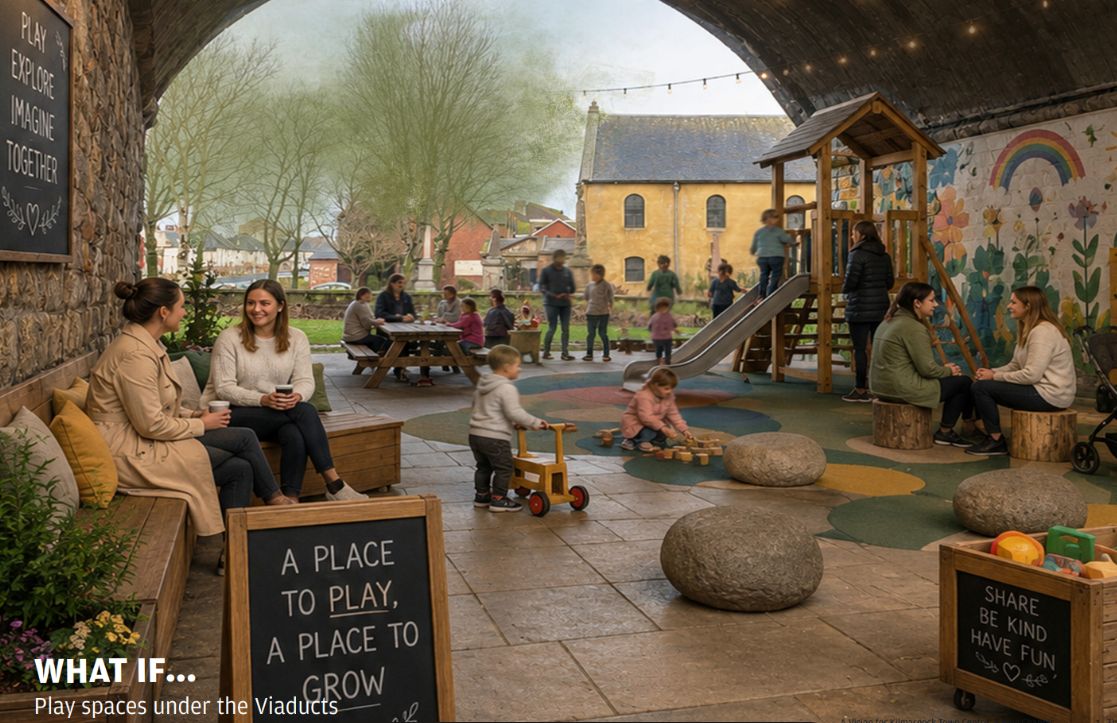

    Successful regeneration begins with getting the fundamentals right. Creating a town centre that is safe, clean, and accessible is essential to attracting investment, supporting businesses, and encouraging people to live, work, and spend time in the town centre.

    High-quality public spaces, well-maintained streets, and an inclusive environment provide the foundation for sustainable economic growth and long-term confidence. By prioritising these core principles, the masterplan aims to create the conditions necessary for future investment and lasting regeneration success.

    Early impact:

    Temporary urbanism uses short team low cost interventions to test ideas and bring empty or underused places back into use before permanent redevelopment.

    Examples can include:

    • pop up retail
    • community gardens
    • outdoor seating
    • container cafes
    • food markets, mini parks, performance spaces, events-based regeneration

    Our story, good news stories

    Celebrating success:

    By celebrating our successes, we can cultivate positive sentiments about Kilmarnock, inspiring pride in place, strengthening the town’s reputation, and encouraging people to champion Kilmarnock as a great place to live, work, visit, and invest.

    Understanding town trends:

    Understanding the social and economic trends within Kilmarnock Town Centre is essential to identifying where investment is most needed and the challenges that must be addressed.

    These trends provide the evidence base for targeted interventions that support regeneration, strengthen the local economy, and improve the town centre’s long-term resilience.

    The decline of the traditional retail core, particularly along King Street, is a key example of these challenges.

    Changes in consumer behaviour, increasing vacancy rates, and reduced footfall have weakened the vitality of this important commercial area, highlighting the need to diversify uses, enhance the public realm, and encourage new forms of investment that will help re-establish the town centre as a vibrant destination.

    Current trends:

  • Monitoring and evaluation

    Share Monitoring and evaluation on Facebook Share Monitoring and evaluation on X (formerly Twitter) Share Monitoring and evaluation on Linkedin Email Monitoring and evaluation link

    Monitoring, evaluating and measuring success

    Monitoring and evaluating progress throughout the masterplanning journey will be fundamental to ensuring that investment delivers the intended economic, social and environmental outcomes. A robust evidence base will enable us to measure the effectiveness of interventions, demonstrate value for money and inform future investment decisions.

    Success will be assessed through a range of key performance indicators and town centre data, including footfall, business survival rates, commercial vacancy levels, business occupancy, visitor numbers, employment, investment secured and wider measures of town centre vitality and resilience. This data will be monitored over time to identify trends, evaluate the impact of projects and ensure that investment continues to respond to changing needs and opportunities.

    Regular engagement with businesses, residents, visitors and stakeholders will also provide valuable insights into how the town centre is performing and how it is experienced. Together, these measures will create a comprehensive monitoring and evaluation framework that supports continuous improvement and ensures the masterplan remains responsive, evidence-led and focused on delivering long-term, sustainable regeneration outcomes.

    Pride in place

    • A clean town - A town that gets the basics right. A clean well maintained town centre that the community can feel proud of. A collaborative effort of public and private sectors working together to take pride in the town centre.
    • A liveable neighbourhood - A town that’s safe, inclusive and accessible for all. A town that promotes health and well being with easy access to health facilities, leisure and learning facilities.

    A Thriving Town

    • A town that’s a vibrant the place to be.
    • A thriving town that is fun for all, full of seasonal events and activities. A place of creativity, community and culture.
    • A place to live, work, learn and leisure.

    Digital transformation and innovation

    A town that embraces digital technology and innovation. A town that integrates smart and sustainable technology into the built environment. A smart town that provides communities and tourists with access to digital platforms and new ways of working.

    Connectivity

    A connected town - A town with attractive key arrival spaces welcoming people to Kilmarnock. A connected town with a compact walkable core that has improved connections between transport hubs, the river and green spaces. An active travel town that is parking friendly and simple to navigate for pedestrians, cars and cyclists.

    Vacant buildings

    • Retail and business development re-use and resilience
    • A town where independent businesses can thrive and where business collaboration and networks flourish.
    • A town where vacant buildings find a new life and purpose to retain our built heritage in a sustainable way.

    Heritage, leisure and public realm - Culture creativity and experience

    A town with a distinct character defined by its rich built heritage and well maintained thriving, public realms. A place for experiences rather than transactions. A place for creativity and culture to thrive. A place for wellness and leisure.

    Town centre living

    Liveable Towns - Enhancing the provision of town centre housing to encourage people to live in the heart of the town centre, contributing to its vibrancy and safety. Creating a 20 minute walkable and accessible neighbourhood.

    Climate

    A sustainable future

    • A town designed for climate change and respect for future generations
    • A town designed to celebrate and work with water and green spaces
    • A town that prioritises the net zero agenda
    • A town that prioritises re-purposing and retrofit

    We will achieve these aims by following these key criteria:

    1. Make the town centre more accessible and easier to move around.
    2. Enhance blue and green infrastructure for nature, wellbeing, play, recreation and resilience.
    3. Incorporate local history, art and traditions into the design of places
    4. Support health and wellbeing
    5. Generate inward investment and stimulate a diverse range of economic.
    6. Provide flexible spaces for a range of economic, recreational and cultural activity, recreation and resilience.
    7. Provide opportunities for people to engage with each other fostering a sense of place and empowering communities to take a role in the success of their town centre recreation and resilience.

    Our Approach

    Kilmarnock Town Centre Regeneration is being driven forward by a Strategic Vision and Conceptual masterplan alongside the delivery of projects identified in the masterplan.

    This is a step change from previous work on the town centre, whereby we are not simply creating a masterplan but are concurrently delivering on the ambitions it sets, even at this preliminary stage.

    From the outset we want to learn from previous work - making sure that the masterplan is a dynamic and evolving document with a strong focus on delivery to meet the ambitions of local community.

    A phased (layer) approach

    A phased [layered] masterplan approach is a strategic framework which overlaps diverse layers to allow for an evolving and dynamic masterplan process. It promotes progression and delivery of projects in real time with ongoing partnership working to deliver complex and larger scale aspirations. Our masterplan will be delivered in three phases.

    Phase 1: Projects and initiatives which can be delivered and which are in our control

    Phase 2: Achievable projects with funding but with some risks or complexities

    Phase 3: Long term aspirational projects with complexities with no funding

    Learning from others

    We will work with others to share expertise and resources to maximise the potential of all our proposed projects:

    • Working in partnership
    • Providing inspiration
    • Real life examples
    • Gaining knowledge, skills and insight
    • Building networks
    • Lessons learned

    Place based approach

    A place-based approach is a flexible, collaborative framework that focuses on the unique characteristics and works in conjunction with residents and users of each place. It requires joint working, collaborative work that takes the unique blend of characteristics that exist in every place. By doing so, it will identify and maximise the positive impact and reduce any unintended consequences of our actions. This approach enables better informed decisions leading to the delivery of more effective services and more resilient communities.

    • Focus on local needs
    • Prevention and early intervention
    • Whole systems approach
    • Community empowerment

    Policy based approach

    A policy based approach ensures that the masterplan and projects deliver on ‘The Golden Thread’ of policies from national, regional to local levels. By using evidence-based policy we can align our masterplan to wider social, economic and global challenges.

    • The golden thread - Strategic framework
    • Addressing local to global challenges and opportunities
    • Addressing social economic challenges

    Evidence based approach

    An evidence-based approach is a disciplined, informed, and reflective method of decision-making that will inform the shaping of the masterplan. It involves detailed analysis of the urban fabric and infrastructure, as well as a places culture, history, social, economic and political landscapes. An evidence-based approach allows for informed decision making by data and scientific research.

    • Integration of multiple research sources
    • Building on previous work
    • Critical appraisal/observations
    • Urban analysis/social/economic/political analysis


  • Background

    Share Background on Facebook Share Background on X (formerly Twitter) Share Background on Linkedin Email Background link

    Kilmarnock’s Percy Johnson Marshall Masterplan (late 1960s–1970s)
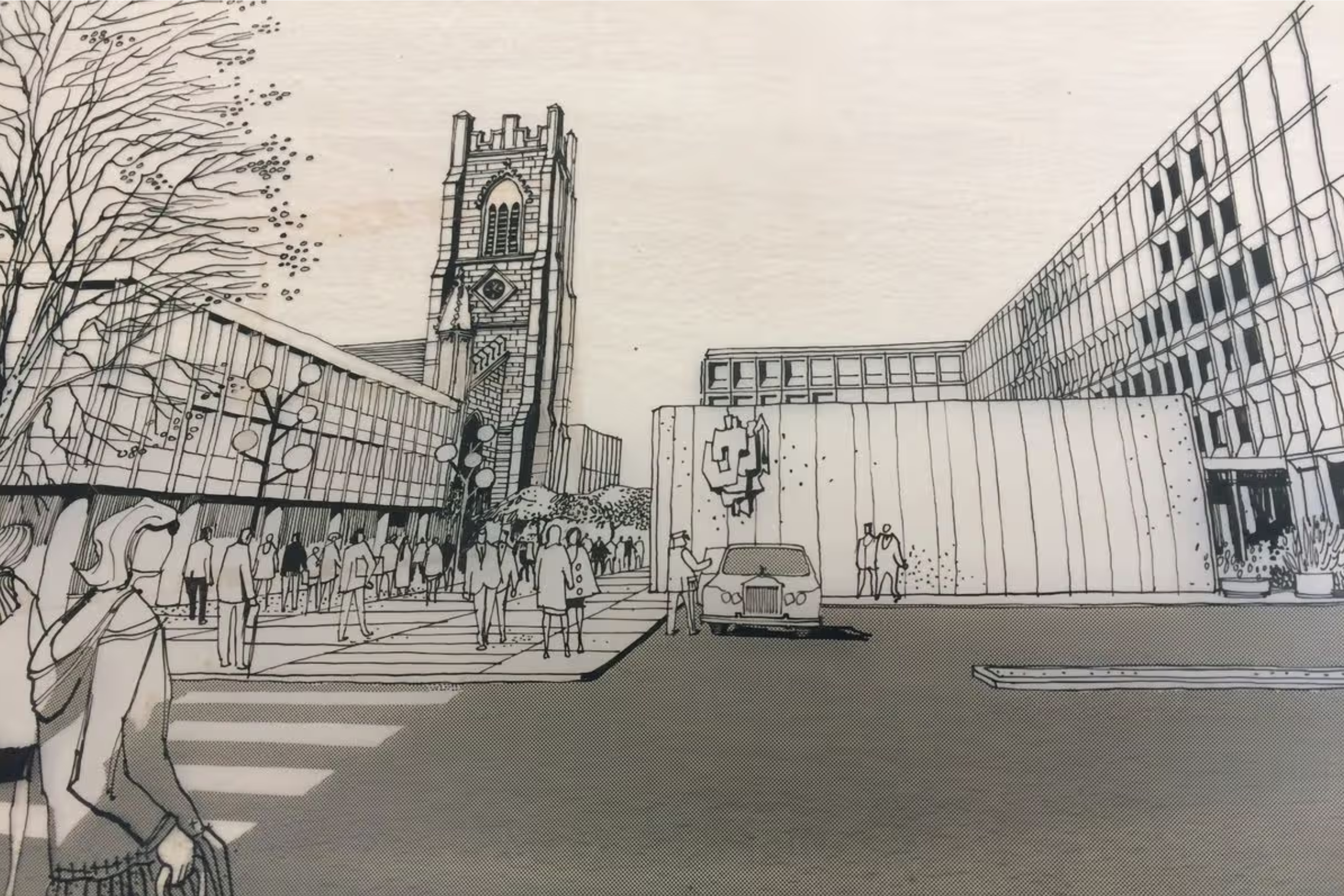
    Percy Johnson Marshall sketch


    The redevelopment of Kilmarnock town centre in the 1970s was guided by a masterplan prepared by the renowned planner Percy Johnson-Marshall and his consultancy, Percy Johnson-Marshall and Associates. Commissioned by Kilmarnock Town Council in 1966, the plan aimed to solve worsening traffic congestion while modernising the town centre for the age of the motor car. The central area plan was developed between 1968 and 1971.


    The Vision - 1970s

    The Masterplan proposed

    • A new inner road system to divert traffic away from historic streets.
    • Large pedestrian shopping precincts.
    • Modern shopping centres, including the Foregate development.
    • Up to seven multi-storey car parks across the town centre to accommodate increasing car ownership.
    • New office developments and civic buildings.
    • Extensive demolition of older buildings considered obsolete at the time.

    Areas affected
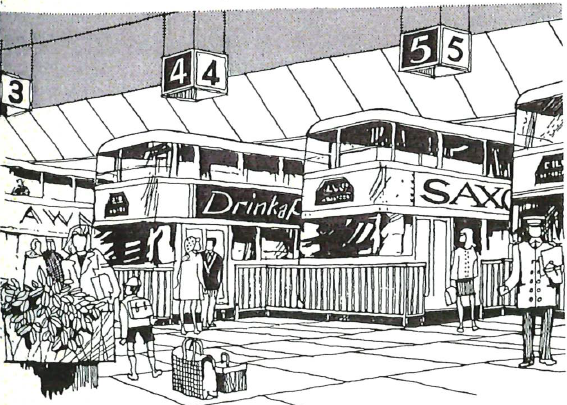
    The bus station vision from Percy Johnson MarshallThe plan dramatically reshaped central Kilmarnock. Demolition included parts of:
    • Portland Street
    • King Street
    • West George Street
    • John Finnie Street
    • Numerous older closes, lanes and Victorian commercial buildings

    Only part of the overall scheme was ever completed, but enough was built to permanently change the town’s historic street pattern.

    Proposals that were never built:

    Some of the most ambitious ideas remained on paper:

    • Seven multi-storey car parks (only one was ultimately built).
    • Wholesale redevelopment of the Newton district.
    • More extensive road construction through the town centre.
    • Additional commercial complexes that were abandoned as economic conditions worsened during the 1970s.

    Legacy

    The scheme reflected the dominant planning philosophy of the 1960s, prioritising traffic flow and modern retail development over historic urban fabric. While it improved vehicle access and created new shopping space, many residents and historians later criticised the loss of historic streets and buildings.

    Today, the Percy Johnson-Marshall plans are often cited as one of Scotland’s most significant examples of post-war comprehensive town-centre redevelopment.

    The original drawings, maps and models for the Kilmarnock project are preserved in the University of Edinburgh’s Percy Johnson-Marshall Collection, where they document both the implemented and unbuilt proposals.

    The next chapter- why we need a Masterplan

    The Kilmarnock Town Centre Masterplan will represent a significant shift in planning philosophy from the post-war vision that shaped much of the town centre during the 1970s. While the original Percy Johnson-Marshall masterplan reflected the priorities of its time, accommodating the car, separating pedestrians from traffic, and promoting large-scale retail-led redevelopment, the new masterplan seeks to create a more resilient, inclusive and people-centred town.

    In many respects, the Vision for our new Masterplan reverses some of the assumptions that underpinned the original Johnson-Marshall plan.

    Rather than designing the town around vehicles and single-purpose land uses, it places people, community and quality of place at the heart of regeneration. It recognises that successful town centres are not defined solely by shopping but by their ability to support everyday life through housing, employment, culture, learning, recreation and social interaction.

    This new chapter does not reject Kilmarnock’s planning history , instead it builds upon it, responding to contemporary challenges with a vision that is more flexible, sustainable and rooted in local identity.
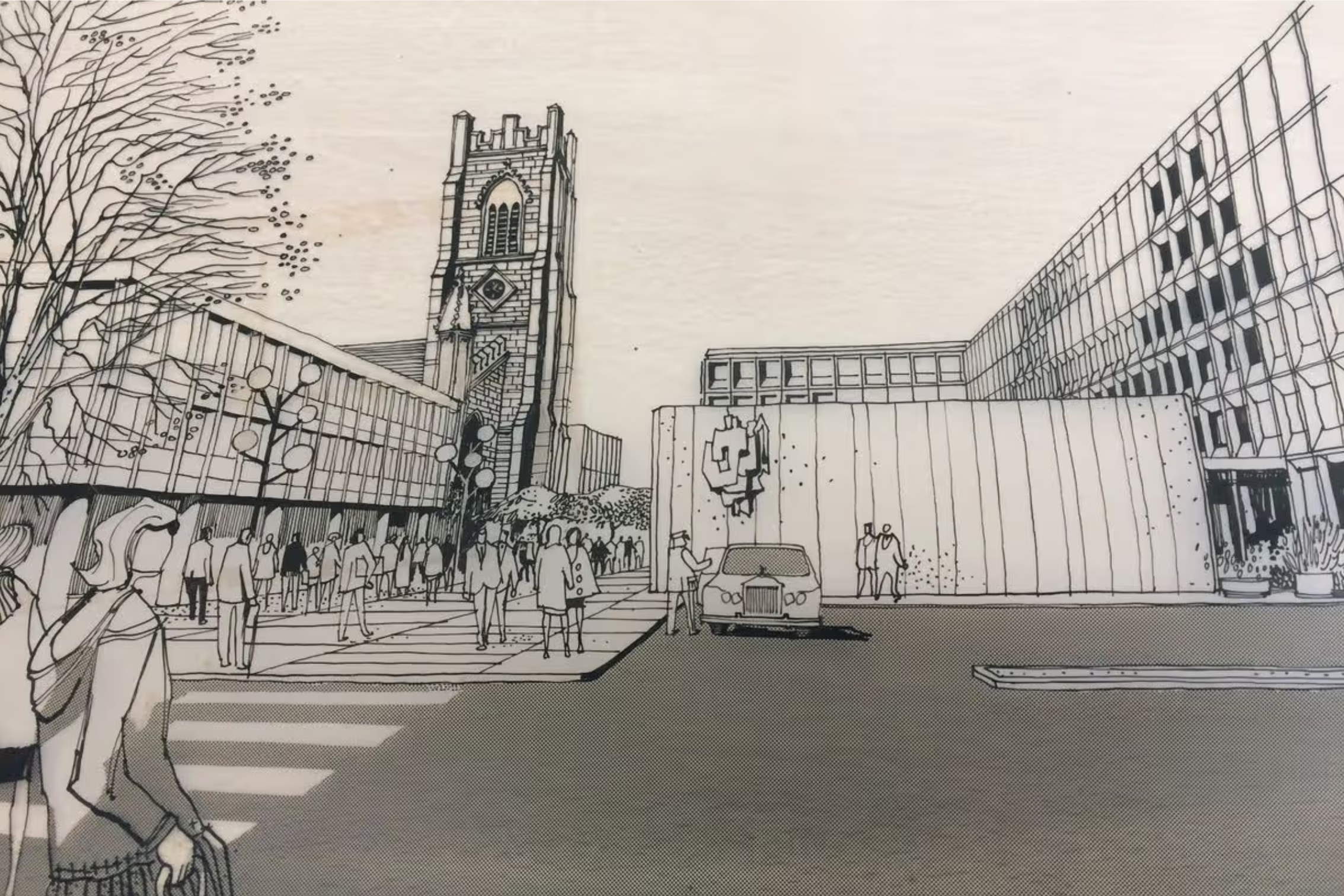


    Kilmarnock’s Percy Johnson Marshall Masterplan (late 1960s–1970s)

    Percy Johnson Marshall sketch


    The redevelopment of Kilmarnock town centre in the 1970s was guided by a masterplan prepared by the renowned planner Percy Johnson-Marshall and his consultancy, Percy Johnson-Marshall and Associates. Commissioned by Kilmarnock Town Council in 1966, the plan aimed to solve worsening traffic congestion while modernising the town centre for the age of the motor car. The central area plan was developed between 1968 and 1971.


    The Vision - 1970s

    The Masterplan proposed

    • A new inner road system to divert traffic away from historic streets.
    • Large pedestrian shopping precincts.
    • Modern shopping centres, including the Foregate development.
    • Up to seven multi-storey car parks across the town centre to accommodate increasing car ownership.
    • New office developments and civic buildings.
    • Extensive demolition of older buildings considered obsolete at the time.

    Areas affected

    The bus station vision from Percy Johnson MarshallThe plan dramatically reshaped central Kilmarnock. Demolition included parts of:
    • Portland Street
    • King Street
    • West George Street
    • John Finnie Street
    • Numerous older closes, lanes and Victorian commercial buildings

    Only part of the overall scheme was ever completed, but enough was built to permanently change the town’s historic street pattern.

    Proposals that were never built:

    Some of the most ambitious ideas remained on paper:

    • Seven multi-storey car parks (only one was ultimately built).
    • Wholesale redevelopment of the Newton district.
    • More extensive road construction through the town centre.
    • Additional commercial complexes that were abandoned as economic conditions worsened during the 1970s.

    Legacy

    The scheme reflected the dominant planning philosophy of the 1960s, prioritising traffic flow and modern retail development over historic urban fabric. While it improved vehicle access and created new shopping space, many residents and historians later criticised the loss of historic streets and buildings.

    Today, the Percy Johnson-Marshall plans are often cited as one of Scotland’s most significant examples of post-war comprehensive town-centre redevelopment.

    The original drawings, maps and models for the Kilmarnock project are preserved in the University of Edinburgh’s Percy Johnson-Marshall Collection, where they document both the implemented and unbuilt proposals.

    The next chapter- why we need a Masterplan

    The Kilmarnock Town Centre Masterplan will represent a significant shift in planning philosophy from the post-war vision that shaped much of the town centre during the 1970s. While the original Percy Johnson-Marshall masterplan reflected the priorities of its time, accommodating the car, separating pedestrians from traffic, and promoting large-scale retail-led redevelopment, the new masterplan seeks to create a more resilient, inclusive and people-centred town.

    In many respects, the Vision for our new Masterplan reverses some of the assumptions that underpinned the original Johnson-Marshall plan.

    Rather than designing the town around vehicles and single-purpose land uses, it places people, community and quality of place at the heart of regeneration. It recognises that successful town centres are not defined solely by shopping but by their ability to support everyday life through housing, employment, culture, learning, recreation and social interaction.

    This new chapter does not reject Kilmarnock’s planning history , instead it builds upon it, responding to contemporary challenges with a vision that is more flexible, sustainable and rooted in local identity.


  • Investment and the Ayrshire Growth Deal

    Share Investment and the Ayrshire Growth Deal on Facebook Share Investment and the Ayrshire Growth Deal on X (formerly Twitter) Share Investment and the Ayrshire Growth Deal on Linkedin Email Investment and the Ayrshire Growth Deal link

    supporting image

    The Ayrshire Growth Deal (AGD) is one of Scotland’s largest regional investment programmes and is expected to play a significant role in the long-term economic transformation of Kilmarnock and the wider East Ayrshire area. It is a partnership between the UK Government, Scottish Government, and the three Ayrshire councils.

    For Kilmarnock, the Ayrshire Growth Deal represents the most significant coordinated public investment programme in decades. If delivered successfully, it has the potential to:

    • Diversify the local economy beyond traditional industries
    • Establish Kilmarnock as a regional innovation hub
    • Improve employment prospects and wages
    • Stimulate substantial private investment
    • Contribute to long-term, inclusive economic growth across East Ayrshire

    Economic growth priorities

    The Growth Deal focuses on sectors where Ayrshire has competitive strengths, including:

    • Aerospace and space
    • Renewable energy and the circular economy
    • Advanced manufacturing
    • Tourism
    • Digital technology
    • Engineering

    Expected benefits for Kilmarnock

    The deal aims to:

    • Create higher-value employment opportunities.
    • Increase productivity and innovation.
    • Attract domestic and international investment.
    • Improve skills and workforce participation.
    • Strengthen supply chains for local businesses.
    • Regenerate key employment sites and support town-centre renewal.

    Our story, creating impact

    Building on Investment:

    Kilmarnock Town Centre has already benefited from investment through a number of transformational projects, including the Palace Theatre and Grand Hall, The HALO, the Ingram Enterprise Centre, the Bus Station Transport Hub, and the demolition of the former multi-storey car park.

    This masterplan builds upon these investments by delivering high-quality, lasting change across the town centre.

    It focuses on:

    • Addressing the remaining gaps in the town’s urban fabric,
    • Improving design quality, public spaces, movement, and infrastructure to reconnect key destinations
    • And create a more cohesive, vibrant, and attractive town centre for residents, businesses, and visitors.

    The Kilmarnock Masterplan will build on all the work achieved so far adopting a focused and coordinated approach to regeneration.

    This will involve completing areas where regeneration has already begun, ensuring that existing investment is fully realised and that regeneration projects are brought to a successful conclusion.

    Read more about the Ayrshire Growth Deal